
Day: March 22, 2026

  • How to Read Your Credit Report Like a Pro (2026 Guide)

    How to Read Your Credit Report Like a Pro (2026 Guide)

    Your credit report is one of the most powerful documents in your financial life — yet most people have never read one carefully. If you’ve ever been denied a loan, a rental, or even a job, your credit report may hold the answer. Learning how to read your credit report isn’t just for finance nerds.

    It’s a skill every adult needs.

    This 2026 guide walks you through every section of your credit report, shows you what lenders actually look for, and teaches you how to spot errors that could be costing you thousands of dollars in higher interest rates.

    Step 1: Get Your Free Credit Report

    Federal law entitles you to one free credit report per year from each of the three major credit bureaus — Equifax, Experian, and TransUnion. The official (and only government-authorized) source is AnnualCreditReport.com. Avoid third-party sites that advertise “free” reports but require a credit card.

    Here’s a smart strategy: since there are three bureaus, pull one report every four months. That way, you’re monitoring your credit year-round without spending a dime. Set a calendar reminder for January (Equifax), May (Experian), and September (TransUnion).

    You can also access your reports weekly for free through AnnualCreditReport.com — a provision that became permanent after the COVID-19 pandemic. Take advantage of it.

    Step 2: Understanding Your Credit Report — Section by Section

    Once you pull your report, don’t be intimidated by the pages of data. Every credit report follows the same basic structure. Here’s what you’ll find and what it means.

    Personal Information

    This section includes your name (including variations or maiden names), current and past addresses, Social Security number (partially masked), date of birth, and employment history.

    What to check: Make sure everything is accurate. Incorrect names or addresses can be signs of identity theft or mixed files (where another person’s data gets merged with yours). This is more common than people think, especially if you have a common name.

    Credit Accounts (Trade Lines)

    This is the heart of your credit report. Each account — credit cards, mortgages, auto loans, student loans, personal loans — appears here as a “trade line.” For each account, you’ll see:

    • Creditor name and account number (partially masked)
    • Account type (revolving, installment, mortgage)
    • Date opened
    • Credit limit or loan amount
    • Current balance
    • Payment history — typically shown as a month-by-month grid (30, 60, 90+ days late)
    • Account status (open, closed, in collections, charged off)

    What to check: Scan for accounts you don’t recognize — that’s a red flag for fraud. Check that balances and credit limits are accurate. Most importantly, verify your payment history. Even one 30-day late payment can drop your score significantly.

    Want to go deeper? Read our full guide on understanding your credit report.

    Public Records

    Public records on a credit report historically included bankruptcies, civil judgments, and tax liens. As of 2018, the major bureaus removed most civil judgments and tax liens. Today, bankruptcies are the primary public record that appears on credit reports.

    A Chapter 7 bankruptcy can stay on your report for up to 10 years. A Chapter 13 stays for 7 years. These are serious derogatory marks that significantly impact lending decisions.

    Inquiries

    Inquiries are records of who has accessed your credit report. There are two types:

    • Hard inquiries: Generated when you apply for credit. These can slightly lower your score and stay on your report for 2 years (though they only affect your score for 12 months).
    • Soft inquiries: Generated when you check your own credit, or when companies pre-screen you for offers. These do NOT affect your score.

    What to check: Look for hard inquiries you don’t recognize. An unauthorized hard pull could indicate identity theft or a creditor error. You have the right to dispute unauthorized inquiries.

    Step 3: How to Spot Errors on Your Credit Report

    A Federal Trade Commission study found that 1 in 5 Americans has an error on at least one credit report. Many of these errors are significant enough to affect lending decisions. Here’s what to look for:

    Common Credit Report Errors

    • Accounts that aren’t yours — could be identity theft or a mixed file
    • Incorrect payment status — being shown as late when you paid on time
    • Wrong account balances or credit limits — affects your credit utilization ratio
    • Duplicate accounts — same debt listed twice, especially after debt sales
    • Outdated negative items — most negative items should fall off after 7 years; check that old collections or charge-offs aren’t lingering past their reporting window
    • Incorrect personal information — wrong address, misspelled name, wrong SSN
    • Accounts closed by you, reported as closed by creditor — minor, but worth correcting

    The 7-Year Reporting Rule

    Under the Fair Credit Reporting Act (FCRA), most negative items — late payments, collections, charge-offs — can only stay on your credit report for 7 years from the date of first delinquency. Bankruptcies are the main exception (10 years for Chapter 7). If you see items past their legal reporting window, that’s an error you can and should dispute.

    Step 4: What to Dispute and How

    Found something wrong? You have the legal right to dispute it. Here’s the process:

    Option 1: Dispute Directly with the Bureau

    Each of the three bureaus has an online dispute portal:

    • Equifax: equifax.com/personal/credit-report-services/credit-dispute/
    • Experian: experian.com/disputes
    • TransUnion: dispute.transunion.com

    Once you file a dispute, the bureau has 30 days to investigate (45 days if you provide additional information). They must contact the creditor who reported the item. If the creditor can’t verify the information, it must be removed.

    Option 2: Dispute Directly with the Creditor

    You can also dispute errors directly with the company that furnished the information. Send a certified letter with documentation explaining the error. The furnisher has 30 days to investigate and report corrections to the bureaus.

    What You Need for a Strong Dispute

    • A clear, specific explanation of what’s wrong and why
    • Supporting documentation (bank statements, payment confirmations, correspondence)
    • Copies of your ID and proof of address

    Vague disputes like “this isn’t mine” without supporting context are often rejected. Be specific.

    Step 5: Know When to Get Professional Help

    DIY disputing works for straightforward errors — wrong address, duplicate account, a payment misreported. But if you’re dealing with multiple negative items, complex errors, or simply don’t have the time to manage the process, professional credit repair can be worth considering.

    At Crowned Credit, we specialize in identifying and disputing inaccurate, unverifiable, and outdated items on your behalf. Our team knows the FCRA inside and out, and we track every dispute to make sure nothing falls through the cracks.

    We offer three plans to fit your situation:

    • Basic Plan — $150 setup + $99/month: Great for clients with a handful of items to address
    • Standard Plan — $249 setup + $149/month: Our most popular plan, covers all three bureaus with comprehensive disputing
    • Premium Plan — $249 setup + $199/month: Full-service with priority support and advanced strategies

    Disclaimer: Results vary based on individual credit history. We cannot guarantee specific outcomes or timelines, as credit reporting is governed by federal law and creditor cooperation.

    Ready to see what’s possible? View our full pricing plans or book a free consultation today.

    Final Checklist: How to Read Your Credit Report

    • ✅ Pull all three reports from AnnualCreditReport.com
    • ✅ Verify your personal information is accurate
    • ✅ Review every trade line — check status, balance, payment history
    • ✅ Look for accounts you don’t recognize
    • ✅ Check for outdated negative items (past 7-year window)
    • ✅ Review hard inquiries for anything unauthorized
    • ✅ Document any errors with supporting evidence
    • ✅ File disputes with the bureau, creditor, or both
    • ✅ Follow up — bureaus have 30 days to respond

    Understanding your credit report is the foundation of credit health. Once you know how to read it, you’re in control. And if what you find is overwhelming, you don’t have to tackle it alone.

    👉 Learn more about understanding your credit report or book a consultation with our credit specialists.

    Disclaimer: Results vary by individual. Credit repair timelines depend on your unique credit history and the nature of the items being disputed. Crowned Credit cannot guarantee specific results or timeframes.
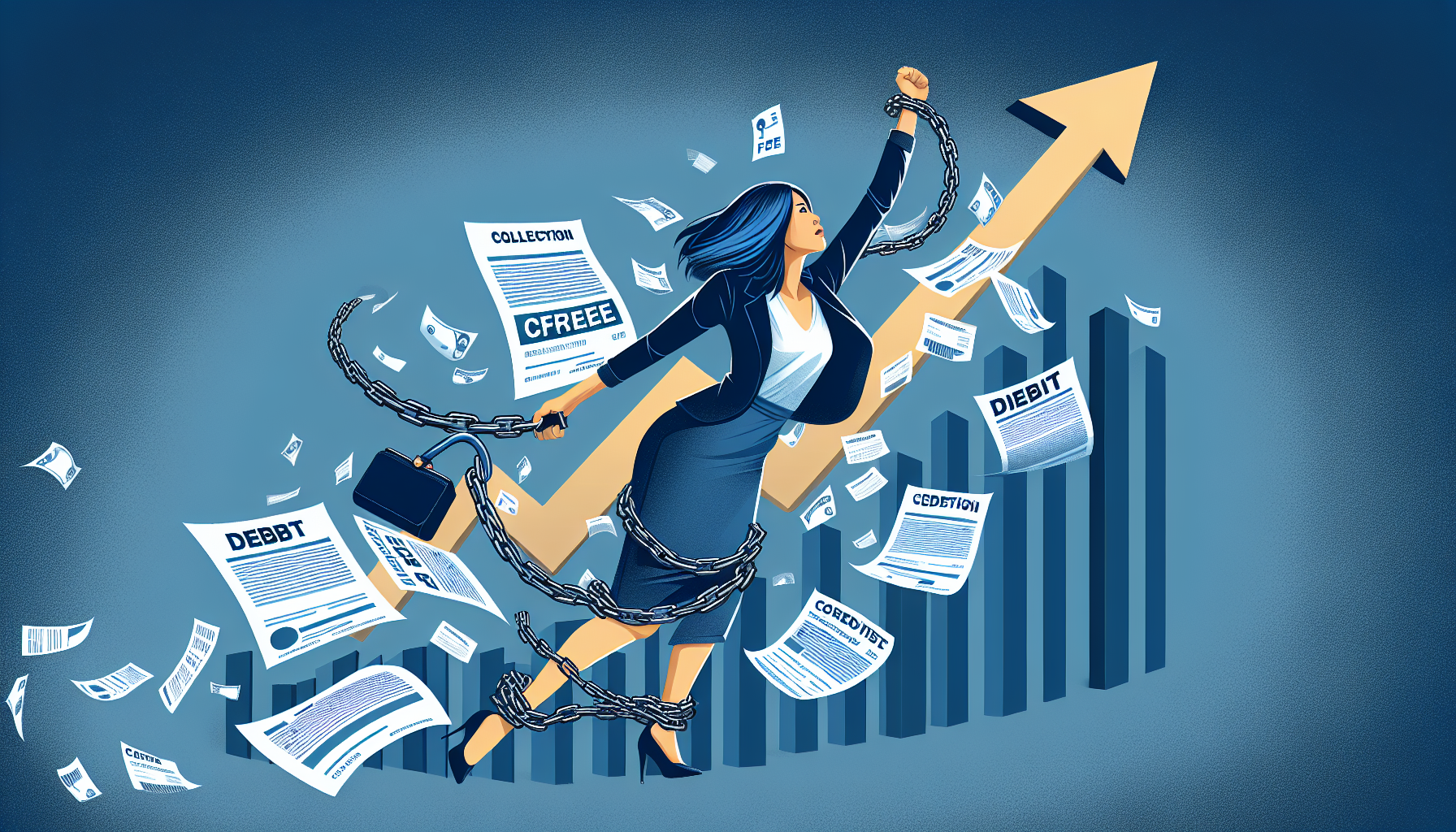
  • Collections on Your Credit Report? Here’s Exactly What to Do

    Collections on Your Credit Report? Here’s Exactly What to Do

    Seeing a collection account on your credit report can feel like a gut punch. Whether it’s an old medical bill, a forgotten utility account, or a disputed charge that spiraled out of control, collections can drag your credit score down by 50 to 100 points — sometimes more. But here’s what most people don’t know: you have more power than you think.

    This guide breaks down exactly what collections are, how they hurt your credit, and the specific steps you can take to address them — from disputing inaccurate information to negotiating pay-for-delete agreements.

    What Is a Collection Account?

    A collection account appears on your credit report when a creditor has given up trying to collect a debt and either sold it to a third-party debt collection agency or hired one to collect on their behalf. This typically happens after an account has been past due for 90 to 180 days.

    Once the debt is sold, the original creditor may also report the account as a “charge-off” — meaning they’ve written it off as a loss on their books. This creates two negative entries on your report: the charge-off from the original creditor and the collection account from the debt buyer. Both are damaging.

    Common sources of collection accounts include:

    • Medical bills (the #1 source of collections in the U.S.)
    • Credit card debt
    • Utility bills
    • Phone or internet service bills
    • Gym memberships and subscription services
    • Landlord disputes and unpaid rent
    • Parking tickets (in some jurisdictions)

    How Collections Affect Your Credit Score

    A single collection account can cause serious score damage. The exact impact depends on several factors:

    • How high your score was before: The higher your score, the bigger the drop. Someone with a 780 score can drop 100+ points from one collection. Someone with a 580 might drop 50 points.
    • How recent the collection is: A collection from last month hits harder than one from 5 years ago. Collections lose scoring impact as they age.
    • The amount owed: Larger balances may signal greater risk to lenders.
    • The scoring model being used: FICO 9 and VantageScore 4.0 ignore paid collections. Older models (FICO 8, which many lenders still use) count paid collections against you.

    Important update for 2025-2026: The three major credit bureaus (Equifax, Experian, and TransUnion) now exclude most medical collections under $500 from credit reports. Additionally, medical debts under $500 were removed entirely from reports in 2023. If you have older medical collections still showing, they may be eligible for removal under new bureau policies.

    Want to understand all the types of negative items and how they compare? Read our guide on types of negative items on your credit report.

    Step 1: Verify the Collection Is Accurate

    Before doing anything, pull your credit reports from AnnualCreditReport.com and examine the collection account carefully. Ask yourself:

    • Do I recognize this debt?
    • Is the creditor name and original account correct?
    • Is the amount accurate?
    • Is the date of first delinquency correct? (This determines when it falls off your report)
    • Is the account past its 7-year reporting window?

    The 7-year clock starts from the date of first delinquency on the original account — not the date the debt was sold to a collector. This is a critical distinction. Debt collectors sometimes try to “re-age” debts by listing a newer delinquency date, which illegally extends how long it appears on your report.

    Step 2: Request Debt Validation

    Under the Fair Debt Collection Practices Act (FDCPA), you have the right to request validation of any debt a collector claims you owe. Within 30 days of first contact from the collector, send a debt validation letter via certified mail.

    The collector must provide:

    • The name and address of the original creditor
    • The amount owed and how it was calculated
    • Proof they have the legal right to collect the debt

    If the collector can’t validate the debt, they must cease collection efforts and request removal from your credit report. This is a legitimate strategy — not a loophole or a trick. It’s federal law.

    Step 3: Dispute Inaccurate Collections

    If anything about the collection is inaccurate — wrong balance, wrong date, wrong creditor, not your debt — you can dispute it directly with the credit bureaus under the Fair Credit Reporting Act (FCRA).

    File disputes with each bureau that’s reporting the error:

    • Equifax: equifax.com/personal/credit-report-services/credit-dispute/
    • Experian: experian.com/disputes
    • TransUnion: dispute.transunion.com

    The bureau has 30 days to investigate. They contact the collection agency to verify the information. If the collector doesn’t respond or can’t verify the account within that window, the bureau must remove it.

    Pro tip: Dispute with all three bureaus simultaneously, since collections can appear on one, two, or all three reports. Don’t assume fixing it on Equifax fixes it everywhere.

    Step 4: Negotiate Pay-for-Delete

    If the collection is legitimate and you can afford to pay it, a pay-for-delete agreement is worth attempting. This is when you offer to pay the debt (often at a discount) in exchange for the collector agreeing to remove the account from your credit reports entirely.

    Here’s how to approach it:

    • Contact the collector in writing — not by phone. You want everything documented.
    • Offer a settlement amount — collectors often accept 40-60% of the original balance, especially on older debts
    • Make deletion the condition of payment — state clearly: “I will pay [amount] only if you agree to delete this account from all three credit bureau reports within 30 days of payment.”
    • Get the agreement in writing before paying anything

    Not all collectors will agree to pay-for-delete. Large banks and original creditors rarely do. Third-party debt collectors are more likely to negotiate. If they won’t delete, a paid collection is still better than an unpaid one — especially under newer scoring models.

    Disclaimer: Pay-for-delete arrangements are not guaranteed. Whether a collector agrees depends on their individual policies and the nature of the debt. Results vary by situation.

    Step 5: Understand the Statute of Limitations

    The statute of limitations on debt determines how long a creditor or collector can sue you to collect. This is separate from — and often shorter than — the 7-year credit reporting window.

    Statutes of limitations vary by state and debt type, typically ranging from 3 to 6 years. After the SOL expires, the debt becomes “time-barred,” meaning collectors lose the right to sue you for it. However:

    • Time-barred debt can still be collected informally — collectors can still call and write
    • Making a payment on old debt can restart the SOL clock in some states
    • Acknowledging the debt in writing can also restart it in certain jurisdictions

    Before paying any old collection, know your state’s statute of limitations. If the debt is time-barred, paying it may expose you to new legal risk without much credit benefit (since the account is about to fall off anyway).

    Special Case: Medical Collections

    Medical debt has unique rules worth knowing:

    • Medical collections under $500 were removed from all three bureau reports in 2023
    • Medical collections paid in full are no longer reported by Equifax, Experian, and TransUnion
    • Unpaid medical collections have a 1-year grace period before they can appear on your report (giving you time to work with insurance or set up a payment plan)

    If you have medical collections still showing, check whether they qualify for removal under these updated bureau policies. You may be able to request removal directly.

    When to Work with a Credit Repair Specialist

    Handling collections on your own is possible — but it takes time, knowledge, and persistence. Most people have jobs, families, and more pressing demands. If you’re dealing with multiple collections, complex disputes, or aggressive collectors, professional help can accelerate the process and reduce stress.

    At Crowned Credit, we’ve helped hundreds of clients navigate exactly this situation. We know how to challenge inaccurate collections, communicate with collectors effectively, and build a strategy tailored to your specific report.

    Our three plans:

    • Basic Plan — $150 setup + $99/month: Ideal if you have a few collections to address
    • Standard Plan — $249 setup + $149/month: Our most popular — covers all three bureaus, full dispute management
    • Premium Plan — $249 setup + $199/month: Priority service with advanced strategies and dedicated support

    Disclaimer: Individual results depend on the nature of the collections, creditor responses, and your overall credit profile. We cannot guarantee specific outcomes or timelines.

    See what’s right for your situation: view our plans and pricing or book your free consultation now.

    Collections Action Plan: Quick Summary

    • ✅ Pull all three credit reports and identify every collection account
    • ✅ Verify the date of first delinquency — is it past 7 years?
    • ✅ Send a debt validation letter within 30 days of collector contact
    • ✅ Dispute inaccurate information with all three bureaus
    • ✅ Check if medical collections qualify for removal under new bureau policies
    • ✅ Negotiate pay-for-delete for valid debts you can settle
    • ✅ Know your state’s statute of limitations before paying old debts
    • ✅ Get everything in writing — agreements, payments, confirmations
    • ✅ Follow up: bureaus have 30 days to complete investigations

    Collections don’t have to define your credit future. With the right approach — and the right help — your credit report can look very different a year from now.

    👉 Learn about all types of negative items on your credit report or let our team review your report for free.

    Disclaimer: Results vary by individual. Credit repair timelines depend on your unique credit history and the nature of the items being disputed. Crowned Credit cannot guarantee specific results or timeframes.